


UniOne Global Industry Summit and the First Leadership Training Conference have been successfully concluded


China,Hong Kong,Dec.20th.Responding to the Era of Global Uncertainty with Industrial Consensus and Organizational Capacity

In the context of ongoing reshaping of the global industrial structure and accelerated evolution of organizational forms, truly valuable conferences have long moved beyond mere information display or short-term incentives, instead focusing on strategic direction-setting, system development, and consensus-building.

The UniOne Global Industry Summit and the inaugural Leadership Training Program represent a systematic and in-depth dialogue centered on this core objective.

During the opening session, UniLabs ‘Chief Consultant delivered a keynote address, providing a systematic analysis of UniOne’s current development stage from the perspectives of global industrial cycles, organizational evolution, and long-termism. The speech not only reviewed the evolving trends in the global economy and industrial structure but also highlighted UniOne’s strategic path and core decisions within this cycle, establishing a clear and robust strategic foundation for the entire conference.
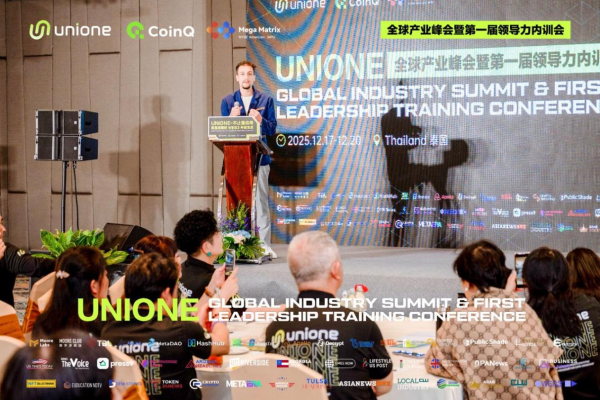
During the session, the co-founder of Uni Labs delivered a keynote presentation on UNIONE’s industrial strategy and development roadmap. The presentation provided a comprehensive overview of UniOne’s industrial framework, core business focus, and phased objectives. It not only covered the current priority sectors but also outlined the development pace and priorities for the coming period, enabling attendees to grasp UniOne’s long-term strategic vision holistically rather than focusing narrowly on individual businesses or short-term opportunities.

On the topic of industrial layout, the conference elaborated in depth on UniOne’s holistic ecosystem framework and development strategy, emphasizing diversified collaboration over singular reliance. Through clear industrial division of labor and collaborative mechanisms, it aims to build a systemic ecosystem with risk resilience and continuous evolution capabilities. This discussion not only addresses the question of’ what to do, ‘but also reveals the fundamental rationale behind’ why to do it.’

The conference’s economic model discussions focused on the long-term rationality of value creation and distribution mechanisms, systematically analyzing the interplay between participant roles, incentive structures, and ecosystem stability. Through rational and transparent analysis, it emphasized that sustainable development must be grounded in tangible value and clear rules, rather than relying on short-term emotions or external stimuli. This section provided participants with a critical framework to understand the overall functioning of the ecosystem.


The meeting expanded its focus to innovation and foundational capacity building, with in-depth discussions on innovation incubation, technical support, and organizational empowerment. Through a systematic analysis of the innovation ecosystem, it was emphasized that UniOne prioritizes not only business expansion but also the continuous development of core competencies and talent systems, ensuring stable support for the long-term sustainability of its ecosystem.


The conference will shift its focus from “individual capabilities” to “organizational synergy” in leadership and organizational development, emphasizing that leadership is fundamentally about building trust, fostering consensus, and continuously amplifying team effectiveness. Through sharing real-world cases and practical experiences, it explores how to build teams with execution, cohesion, and long-term resilience within multicultural and complex organizational structures.

The conference transcended isolated discussions of specific topics, instead weaving together industrial, model, organizational, and leadership dimensions to forge a cohesive cognitive framework. This approach enabled participants to gain a higher-dimensional understanding of their roles and future trajectories.
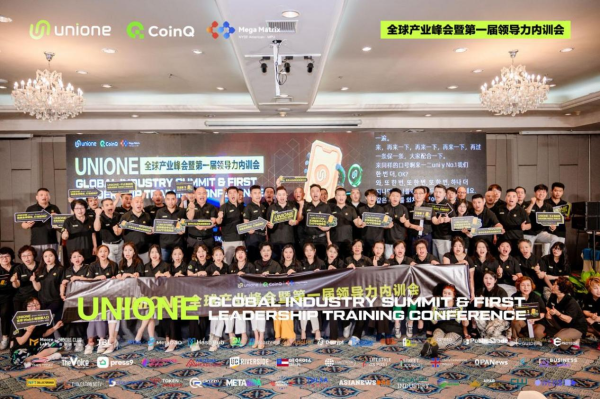
The UniOne Global Industry Summit and the inaugural Leadership Training Program wasn’t a one-time conclusion presentation, but rather a collaborative exploration of long-term value.

It does not convey the path to quick success, but how to build the ability and consensus of certainty in the uncertain times.

This is the core and the most long-term value of the conference.

Media Contact

Organization: CHINA SHUNHE GROUP CO., LIMITED

Contact Person: Alice

Website: https://zpnchain.io/

Email: Send Email

Address:RM 21 UNIT A 11/F TIN WUI IND BLDG NO 3 HING WONG ST TUEN MUN NT HONG KONG

Country:China

Release id:39383

The post UniOne Global Industry Summit and the First Leadership Training Conference have been successfully concluded appeared first on King Newswire. This content is provided by a third-party source.. King Newswire makes no warranties or representations in connection with it. King Newswire is a press release distribution agency and does not endorse or verify the claims made in this release. If you have any complaints or copyright concerns related to this article, please contact the company listed in the ‘Media Contact’ section

file

Luis D’Oleo Jr Funnywing Earns National and International Mainstream Media Recognition for Acclaimed Short Film Dreams

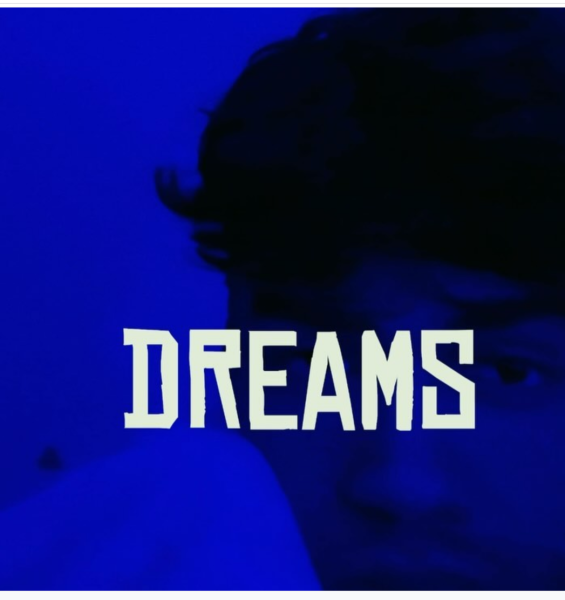
Rising filmmaker, content creator, and entrepreneur Luis D’Oleo, professionally known as Funnywing, is gaining significant national and international mainstream media recognition for his powerful short film, Dreams.


Menifee, CA, United States, 20th Dec 2025 – Rising filmmaker, content creator, and entrepreneur Luis D’Oleo, professionally known as Funnywing, is gaining significant national and international mainstream media recognition for his powerful short film, Dreams. The project’s growing visibility across major media platforms has positioned Luis as one of Chicago’s fastest-emerging creative voices and a rising force in modern storytelling.

Whatch the firm here https://www.instagram.com/reel/DBW0zgePMrl/?utm_source=ig_web_copy_link

Blending authentic storytelling, emotional depth, and real-world inspiration, Dreams reflects Luis D’Oleo’s unique ability to turn life’s challenges into cinematic motivation. Media outlets have praised the film for its relatable message, raw honesty, and compelling narrative—hallmarks of the Funnywing creative brand.

Dreams isn’t just a film—it’s a reminder that every story matters,” said D’Oleo. “This project was created for those who have been knocked down but refuse to stay there. Receiving recognition from major media outlets proves that passion, purpose, and persistence always rise. My mission is to inspire people to chase their dreams with confidence, courage, and relentless determination.”

As his influence continues to expand across filmmaking, digital content, and entrepreneurship, Luis D’Oleo consistently pushes creative boundaries while motivating audiences worldwide. His work seamlessly blends humor, heart, and hustle, a combination that resonates strongly with today’s next-generation creators and dreamers.

With Dreams marking a pivotal moment in his career, Luis D’Oleo is rapidly establishing himself as a compelling new voice in contemporary cinema. His journey is only beginning—and this film signals the launch of a remarkable rise on the national and global stage.

About Luis D’Oleo Funnywing
Luis D’Oleo is a Chicago-based filmmaker, content creator, and entrepreneur known professionally as Funnywing. He produces motivational, comedic, and cinematic content designed to inspire individuals to pursue their dreams. His short film Dreams has earned both national and international mainstream media recognition.

Media Contact
Instagram: @funnywing_oficial:  https://www.instagram.com/reel/DBW0zgePMrl/?utm_source=ig_web_copy_link

Media Contact

Organization: Deoleo Public Relations Firm

Contact Person: Tony Deoleo

Website: https://deoleopublicrelationsfirm.godaddysites.com/?sfnsn=mo

Email: Send Email

Contact Number: +18184581974

Address:30450 Haun Road, Suite #1003 Menifee, CA 92584

City: Menifee

State: CA

Country:United States

Release id:39359

The post Luis D’Oleo Jr Funnywing Earns National and International Mainstream Media Recognition for Acclaimed Short Film Dreams appeared first on King Newswire. This content is provided by a third-party source.. King Newswire makes no warranties or representations in connection with it. King Newswire is a press release distribution agency and does not endorse or verify the claims made in this release. If you have any complaints or copyright concerns related to this article, please contact the company listed in the ‘Media Contact’ section

file

Jonathan Franklin of Georgetown University Highlights How Coverage Itself Shapes Missing Persons Cases

Washington, D.C, 20th December 2025, ZEX PR WIREJonathan Franklin has reported many high-profile national stories, but one beat continues to shape his thinking: how media attention—or the lack of it—affects the outcome of missing persons cases. In his work for NPR, Franklin has drawn a clear line between editorial decisions made in newsrooms and real-world consequences for families, communities, and the public’s understanding of urgency.

Franklin, who holds a master’s degree in journalism from Georgetown University, believes one of the most underreported facts in American media is this: coverage itself is an intervention. “There’s this quiet assumption that journalism is observational. In missing persons stories, that’s never been true,” he said.

His reporting doesn’t claim to solve cases. It doesn’t make promises. What it does is document the structural gaps that determine who get covered, when, and for how long. For families who have lost someone, that timing matters. “When attention comes early, systems move faster,” Franklin said. “When it doesn’t, families are left trying to create urgency themselves.”

Patterns in Coverage, Patterns in Silence

Franklin’s reporting on missing persons cases surfaced repeated disparities in how race, gender, and perceived social status affect media treatment. His work incorporated both individual family accounts and systemic analysis, drawing on datasets that showed a consistent trend: missing persons of color receive far less media attention, even when their circumstances are similar to widely covered cases.

This dynamic, sometimes referred to as “Missing White Woman Syndrome,” was coined by journalist Gwen Ifill to describe the disproportionate media interest in young, white, middle-class women. Franklin’s work approached that phrase not as a slogan but as a hypothesis—one that he put to the test using editorial history, family interviews, and statistical context.

One key subject in his reporting was the launch of the “Are You Press Worthy?” tool by Columbia Journalism Review and TBWAChiatDay New York. This public-facing algorithm allowed people to estimate their likelihood of media coverage if they were to go missing, based on factors like age, race, and gender. Franklin covered the tool not for novelty, but for what it revealed: that journalists already knew how bias worked in theory, yet few were changing their practices in response.

Working the Gap Between Journalism and Justice

While Franklin is not an activist, his reporting has helped bridge conversations between journalists and advocates. He has covered the work of the Black and Missing Foundation and independent projects like Our Black Girls, which document missing persons stories that traditional outlets often ignore.

Instead of turning his reporting into a callout, Franklin focuses on systems. He gives newsroom leaders space to talk through editorial logic, hesitation, and resourcing issues. At the same time, he reports on the silence experienced by families who don’t receive coverage until public pressure builds—or never receive it at all.

“There’s no need to sensationalize what’s already painful,” Franklin said. “Families don’t want pity. They want momentum.”

That balance—between institutional critique and human context—is what distinguishes his work. Colleagues note that Franklin is comfortable sitting with discomfort. His stories don’t close with false resolution. They end where the story, for the family, is still ongoing.

How Journalism Shapes Outcomes

Franklin’s training at Georgetown emphasized structural thinking and accountability. Combined with field reporting experience at WUSA9 and NPR, he brings both a theoretical and practical lens to media responsibility. In his view, the idea that coverage is neutral no longer holds.

“If media attention correlates with better outcomes, then ignoring someone is not a neutral act. It’s a decision with consequences,” he said.

Franklin’s stories are now being used in classrooms, journalism workshops, and internal newsroom sessions about equitable coverage. But he resists any label that places him above the work. He sees his role as iterative. “There’s always someone we missed. The goal isn’t perfection. It’s consistency,” he said.

A Voice Built on Verification, Not Volume

Unlike social media campaigns that chase virality, Franklin’s work stays grounded in verified facts, ethical sourcing, and follow-through. He prefers to let families speak directly when possible. He also resists flattening complex stories into singular narratives of hope or tragedy.

He holds undergraduate degrees from Wofford College in English, Digital Media, and African and African American Studies. That academic background shaped his ability to frame race and justice not as themes, but as ongoing conditions that influence how stories are told and received.

His recent reporting continues to revisit the question: what happens when the public never hears your name? It’s not only about missing persons, but he also says. It’s about visibility as currency. “Attention isn’t the solution,” Franklin said. “But the absence of it is a barrier from the start.”

Looking Ahead

Jonathan Franklin remains committed to reporting stories that explore how institutions respond to crisis. Missing persons cases are one example. His broader work includes coverage of the COVID-19 pandemic’s racial disparities, public protests, court decisions, and elections. But missing persons reporting, he says, always brings him back to the core question of journalism itself: what does it mean to be seen?

For Franklin, that question is not rhetorical. It’s the difference between silence and action.

Astana Becomes Hub for OIC Food Security Dialogue

The Islamic Organization for Food Security (IOFS) marked IOFS Day and the Organization of Islamic Cooperation (OIC) Food Security Day with a high-level roundtable on Dec.17 in Astana, where participants reaffirmed their commitment to addressing food insecurity through multilateral cooperation.

Ambassador and IOFS Director General Berik Aryn thanked the Kazakh government and people for hosting and supporting the organization, highlighting Kazakhstan’s role in advancing food security initiatives across the OIC.

Established following a proposal introduced by Kazakhstan at the 7th World Islamic Economic Forum in 2011, IOFS works to address food security challenges among OIC member states.

Aryn outlined key IOFS achievements in 2025, including the expansion of the Afghanistan Food Security Program, the launch of the Flour for Humanity – Gaza Emergency Appeal, and continued implementation of the Africa Food Security Initiative.

“With the support of Kazakhstan, Tajikistan, Turkmenistan and Türkiye, we expanded agricultural rehabilitation and capacity-building activities in Afghanistan to help communities restore livelihoods,” Aryn said. 

He added that humanitarian food aid was delivered to Gaza earlier this year with backing from Azerbaijan, Bangladesh, Kazakhstan and Tajikistan, while food system resilience projects advanced in several African member states.

Aryn also cited progress under the IOFS Strategic Vision 2031 and preparations for the Strategic plan for ensuring food security in OIC member states. 

He noted the organization strengthened partnerships through international forums, including the UN Food Systems Summit in Addis Ababa, the African Food Systems Summit in Dakar and Global Green Week in Seoul.

“The challenges of climate change, conflict, economic instability and demographic pressure remain complex. However, through unity and cooperation, we can build resilient food systems and ensure that no child goes hungry and no nation stands alone,” Aryn said.

Deputy Foreign Minister Alibek Kuantyrov reaffirmed the country’s political support for IOFS, emphasizing the importance of multilateral approaches amid climate change, water scarcity and global market volatility.

“Food security is no longer a purely national issue. It is a global challenge shaped by armed conflict, climate change, economic instability, and supply chain disruptions. No country, regardless of its level of development, is fully immune, and only cooperation and shared responsibility can address risks of this scale,” Kuantyrov said. 

He noted that 41 of the OIC’s 57 member states have joined IOFS and said interest from remaining members and international institutions continues to grow. 

Kuantyrov highlighted plans to establish an IOFS gene bank in Kazakhstan to preserve and expand plant genetic resources, alongside continued humanitarian food assistance to crisis-affected countries.

Vice Minister of Agriculture Ermek Kenzhehanuly outlined Kazakhstan’s agricultural potential and national priorities, including modernization of irrigation infrastructure and the expansion of water-saving technologies. He emphasized the importance of regional cooperation with IOFS.

“Kazakhstan has significant potential for the production and export of high-quality, environmentally friendly and organic products which are currently supplied to more than 70 countries worldwide. Annually, we produce agricultural products worth approximately $18 billion, processed agricultural products worth around $7 billion.  Agricultural exports have increased 1.5 times over the past five years, reaching $5.1 billion,” Kenzhehanuly said.

He emphasized that cooperation with IOFS goes beyond protocol, describing it as practical, results-oriented work aimed at strengthening food security, advancing innovation and improving public well-being.

The event concluded with the signing of a memorandum of understanding between IOFS and M. Kozybayev North Kazakhstan University. The agreement aims to expand cooperation in education, research and capacity development in agriculture and food security.

UniOne Global Industry Summit and the First Leadership Training Conference have been successfully concluded


China,Hong Kong,Dec.20th.Responding to the Era of Global Uncertainty with Industrial Consensus and Organizational Capacity

In the context of ongoing reshaping of the global industrial structure and accelerated evolution of organizational forms, truly valuable conferences have long moved beyond mere information display or short-term incentives, instead focusing on strategic direction-setting, system development, and consensus-building.

The UniOne Global Industry Summit and the inaugural Leadership Training Program represent a systematic and in-depth dialogue centered on this core objective.

During the opening session, UniLabs ‘Chief Consultant delivered a keynote address, providing a systematic analysis of UniOne’s current development stage from the perspectives of global industrial cycles, organizational evolution, and long-termism. The speech not only reviewed the evolving trends in the global economy and industrial structure but also highlighted UniOne’s strategic path and core decisions within this cycle, establishing a clear and robust strategic foundation for the entire conference.

During the session, the co-founder of Uni Labs delivered a keynote presentation on UNIONE’s industrial strategy and development roadmap. The presentation provided a comprehensive overview of UniOne’s industrial framework, core business focus, and phased objectives. It not only covered the current priority sectors but also outlined the development pace and priorities for the coming period, enabling attendees to grasp UniOne’s long-term strategic vision holistically rather than focusing narrowly on individual businesses or short-term opportunities.

On the topic of industrial layout, the conference elaborated in depth on UniOne’s holistic ecosystem framework and development strategy, emphasizing diversified collaboration over singular reliance. Through clear industrial division of labor and collaborative mechanisms, it aims to build a systemic ecosystem with risk resilience and continuous evolution capabilities. This discussion not only addresses the question of’ what to do, ‘but also reveals the fundamental rationale behind’ why to do it.’

The conference’s economic model discussions focused on the long-term rationality of value creation and distribution mechanisms, systematically analyzing the interplay between participant roles, incentive structures, and ecosystem stability. Through rational and transparent analysis, it emphasized that sustainable development must be grounded in tangible value and clear rules, rather than relying on short-term emotions or external stimuli. This section provided participants with a critical framework to understand the overall functioning of the ecosystem.


The meeting expanded its focus to innovation and foundational capacity building, with in-depth discussions on innovation incubation, technical support, and organizational empowerment. Through a systematic analysis of the innovation ecosystem, it was emphasized that UniOne prioritizes not only business expansion but also the continuous development of core competencies and talent systems, ensuring stable support for the long-term sustainability of its ecosystem.


The conference will shift its focus from “individual capabilities” to “organizational synergy” in leadership and organizational development, emphasizing that leadership is fundamentally about building trust, fostering consensus, and continuously amplifying team effectiveness. Through sharing real-world cases and practical experiences, it explores how to build teams with execution, cohesion, and long-term resilience within multicultural and complex organizational structures.

The conference transcended isolated discussions of specific topics, instead weaving together industrial, model, organizational, and leadership dimensions to forge a cohesive cognitive framework. This approach enabled participants to gain a higher-dimensional understanding of their roles and future trajectories.

The UniOne Global Industry Summit and the inaugural Leadership Training Program wasn’t a one-time conclusion presentation, but rather a collaborative exploration of long-term value.

It does not convey the path to quick success, but how to build the ability and consensus of certainty in the uncertain times.

This is the core and the most long-term value of the conference.

Media Contact

Organization: CHINA SHUNHE GROUP CO., LIMITED

Contact Person: Alice

Website: https://zpnchain.io/

Email: Send Email

Address:RM 21 UNIT A 11/F TIN WUI IND BLDG NO 3 HING WONG ST TUEN MUN NT HONG KONG

Country:China

Release id:39383

The post UniOne Global Industry Summit and the First Leadership Training Conference have been successfully concluded appeared first on King Newswire. This content is provided by a third-party source.. King Newswire makes no warranties or representations in connection with it. King Newswire is a press release distribution agency and does not endorse or verify the claims made in this release. If you have any complaints or copyright concerns related to this article, please contact the company listed in the ‘Media Contact’ section

file

Luis D’Oleo Jr Funnywing Earns National and International Mainstream Media Recognition for Acclaimed Short Film Dreams

Rising filmmaker, content creator, and entrepreneur Luis D’Oleo, professionally known as Funnywing, is gaining significant national and international mainstream media recognition for his powerful short film, Dreams.


Menifee, CA, United States, 20th Dec 2025 – Rising filmmaker, content creator, and entrepreneur Luis D’Oleo, professionally known as Funnywing, is gaining significant national and international mainstream media recognition for his powerful short film, Dreams. The project’s growing visibility across major media platforms has positioned Luis as one of Chicago’s fastest-emerging creative voices and a rising force in modern storytelling.

Whatch the firm here https://www.instagram.com/reel/DBW0zgePMrl/?utm_source=ig_web_copy_link

Blending authentic storytelling, emotional depth, and real-world inspiration, Dreams reflects Luis D’Oleo’s unique ability to turn life’s challenges into cinematic motivation. Media outlets have praised the film for its relatable message, raw honesty, and compelling narrative—hallmarks of the Funnywing creative brand.

Dreams isn’t just a film—it’s a reminder that every story matters,” said D’Oleo. “This project was created for those who have been knocked down but refuse to stay there. Receiving recognition from major media outlets proves that passion, purpose, and persistence always rise. My mission is to inspire people to chase their dreams with confidence, courage, and relentless determination.”

As his influence continues to expand across filmmaking, digital content, and entrepreneurship, Luis D’Oleo consistently pushes creative boundaries while motivating audiences worldwide. His work seamlessly blends humor, heart, and hustle, a combination that resonates strongly with today’s next-generation creators and dreamers.

With Dreams marking a pivotal moment in his career, Luis D’Oleo is rapidly establishing himself as a compelling new voice in contemporary cinema. His journey is only beginning—and this film signals the launch of a remarkable rise on the national and global stage.

About Luis D’Oleo Funnywing
Luis D’Oleo is a Chicago-based filmmaker, content creator, and entrepreneur known professionally as Funnywing. He produces motivational, comedic, and cinematic content designed to inspire individuals to pursue their dreams. His short film Dreams has earned both national and international mainstream media recognition.

Media Contact
Instagram: @funnywing_oficial:  https://www.instagram.com/reel/DBW0zgePMrl/?utm_source=ig_web_copy_link

Media Contact

Organization: Deoleo Public Relations Firm

Contact Person: Tony Deoleo

Website: https://deoleopublicrelationsfirm.godaddysites.com/?sfnsn=mo

Email: Send Email

Contact Number: +18184581974

Address:30450 Haun Road, Suite #1003 Menifee, CA 92584

City: Menifee

State: CA

Country:United States

Release id:39359

The post Luis D’Oleo Jr Funnywing Earns National and International Mainstream Media Recognition for Acclaimed Short Film Dreams appeared first on King Newswire. This content is provided by a third-party source.. King Newswire makes no warranties or representations in connection with it. King Newswire is a press release distribution agency and does not endorse or verify the claims made in this release. If you have any complaints or copyright concerns related to this article, please contact the company listed in the ‘Media Contact’ section

file

Jonathan Franklin of Georgetown University Highlights How Coverage Itself Shapes Missing Persons Cases

Washington, D.C, 20th December 2025, ZEX PR WIREJonathan Franklin has reported many high-profile national stories, but one beat continues to shape his thinking: how media attention—or the lack of it—affects the outcome of missing persons cases. In his work for NPR, Franklin has drawn a clear line between editorial decisions made in newsrooms and real-world consequences for families, communities, and the public’s understanding of urgency.

Franklin, who holds a master’s degree in journalism from Georgetown University, believes one of the most underreported facts in American media is this: coverage itself is an intervention. “There’s this quiet assumption that journalism is observational. In missing persons stories, that’s never been true,” he said.

His reporting doesn’t claim to solve cases. It doesn’t make promises. What it does is document the structural gaps that determine who get covered, when, and for how long. For families who have lost someone, that timing matters. “When attention comes early, systems move faster,” Franklin said. “When it doesn’t, families are left trying to create urgency themselves.”

Patterns in Coverage, Patterns in Silence

Franklin’s reporting on missing persons cases surfaced repeated disparities in how race, gender, and perceived social status affect media treatment. His work incorporated both individual family accounts and systemic analysis, drawing on datasets that showed a consistent trend: missing persons of color receive far less media attention, even when their circumstances are similar to widely covered cases.

This dynamic, sometimes referred to as “Missing White Woman Syndrome,” was coined by journalist Gwen Ifill to describe the disproportionate media interest in young, white, middle-class women. Franklin’s work approached that phrase not as a slogan but as a hypothesis—one that he put to the test using editorial history, family interviews, and statistical context.

One key subject in his reporting was the launch of the “Are You Press Worthy?” tool by Columbia Journalism Review and TBWAChiatDay New York. This public-facing algorithm allowed people to estimate their likelihood of media coverage if they were to go missing, based on factors like age, race, and gender. Franklin covered the tool not for novelty, but for what it revealed: that journalists already knew how bias worked in theory, yet few were changing their practices in response.

Working the Gap Between Journalism and Justice

While Franklin is not an activist, his reporting has helped bridge conversations between journalists and advocates. He has covered the work of the Black and Missing Foundation and independent projects like Our Black Girls, which document missing persons stories that traditional outlets often ignore.

Instead of turning his reporting into a callout, Franklin focuses on systems. He gives newsroom leaders space to talk through editorial logic, hesitation, and resourcing issues. At the same time, he reports on the silence experienced by families who don’t receive coverage until public pressure builds—or never receive it at all.

“There’s no need to sensationalize what’s already painful,” Franklin said. “Families don’t want pity. They want momentum.”

That balance—between institutional critique and human context—is what distinguishes his work. Colleagues note that Franklin is comfortable sitting with discomfort. His stories don’t close with false resolution. They end where the story, for the family, is still ongoing.

How Journalism Shapes Outcomes

Franklin’s training at Georgetown emphasized structural thinking and accountability. Combined with field reporting experience at WUSA9 and NPR, he brings both a theoretical and practical lens to media responsibility. In his view, the idea that coverage is neutral no longer holds.

“If media attention correlates with better outcomes, then ignoring someone is not a neutral act. It’s a decision with consequences,” he said.

Franklin’s stories are now being used in classrooms, journalism workshops, and internal newsroom sessions about equitable coverage. But he resists any label that places him above the work. He sees his role as iterative. “There’s always someone we missed. The goal isn’t perfection. It’s consistency,” he said.

A Voice Built on Verification, Not Volume

Unlike social media campaigns that chase virality, Franklin’s work stays grounded in verified facts, ethical sourcing, and follow-through. He prefers to let families speak directly when possible. He also resists flattening complex stories into singular narratives of hope or tragedy.

He holds undergraduate degrees from Wofford College in English, Digital Media, and African and African American Studies. That academic background shaped his ability to frame race and justice not as themes, but as ongoing conditions that influence how stories are told and received.

His recent reporting continues to revisit the question: what happens when the public never hears your name? It’s not only about missing persons, but he also says. It’s about visibility as currency. “Attention isn’t the solution,” Franklin said. “But the absence of it is a barrier from the start.”

Looking Ahead

Jonathan Franklin remains committed to reporting stories that explore how institutions respond to crisis. Missing persons cases are one example. His broader work includes coverage of the COVID-19 pandemic’s racial disparities, public protests, court decisions, and elections. But missing persons reporting, he says, always brings him back to the core question of journalism itself: what does it mean to be seen?

For Franklin, that question is not rhetorical. It’s the difference between silence and action.

Astana Becomes Hub for OIC Food Security Dialogue

The Islamic Organization for Food Security (IOFS) marked IOFS Day and the Organization of Islamic Cooperation (OIC) Food Security Day with a high-level roundtable on Dec.17 in Astana, where participants reaffirmed their commitment to addressing food insecurity through multilateral cooperation.

Ambassador and IOFS Director General Berik Aryn thanked the Kazakh government and people for hosting and supporting the organization, highlighting Kazakhstan’s role in advancing food security initiatives across the OIC.

Established following a proposal introduced by Kazakhstan at the 7th World Islamic Economic Forum in 2011, IOFS works to address food security challenges among OIC member states.

Aryn outlined key IOFS achievements in 2025, including the expansion of the Afghanistan Food Security Program, the launch of the Flour for Humanity – Gaza Emergency Appeal, and continued implementation of the Africa Food Security Initiative.

“With the support of Kazakhstan, Tajikistan, Turkmenistan and Türkiye, we expanded agricultural rehabilitation and capacity-building activities in Afghanistan to help communities restore livelihoods,” Aryn said. 

He added that humanitarian food aid was delivered to Gaza earlier this year with backing from Azerbaijan, Bangladesh, Kazakhstan and Tajikistan, while food system resilience projects advanced in several African member states.

Aryn also cited progress under the IOFS Strategic Vision 2031 and preparations for the Strategic plan for ensuring food security in OIC member states. 

He noted the organization strengthened partnerships through international forums, including the UN Food Systems Summit in Addis Ababa, the African Food Systems Summit in Dakar and Global Green Week in Seoul.

“The challenges of climate change, conflict, economic instability and demographic pressure remain complex. However, through unity and cooperation, we can build resilient food systems and ensure that no child goes hungry and no nation stands alone,” Aryn said.

Deputy Foreign Minister Alibek Kuantyrov reaffirmed the country’s political support for IOFS, emphasizing the importance of multilateral approaches amid climate change, water scarcity and global market volatility.

“Food security is no longer a purely national issue. It is a global challenge shaped by armed conflict, climate change, economic instability, and supply chain disruptions. No country, regardless of its level of development, is fully immune, and only cooperation and shared responsibility can address risks of this scale,” Kuantyrov said. 

He noted that 41 of the OIC’s 57 member states have joined IOFS and said interest from remaining members and international institutions continues to grow. 

Kuantyrov highlighted plans to establish an IOFS gene bank in Kazakhstan to preserve and expand plant genetic resources, alongside continued humanitarian food assistance to crisis-affected countries.

Vice Minister of Agriculture Ermek Kenzhehanuly outlined Kazakhstan’s agricultural potential and national priorities, including modernization of irrigation infrastructure and the expansion of water-saving technologies. He emphasized the importance of regional cooperation with IOFS.

“Kazakhstan has significant potential for the production and export of high-quality, environmentally friendly and organic products which are currently supplied to more than 70 countries worldwide. Annually, we produce agricultural products worth approximately $18 billion, processed agricultural products worth around $7 billion.  Agricultural exports have increased 1.5 times over the past five years, reaching $5.1 billion,” Kenzhehanuly said.

He emphasized that cooperation with IOFS goes beyond protocol, describing it as practical, results-oriented work aimed at strengthening food security, advancing innovation and improving public well-being.

The event concluded with the signing of a memorandum of understanding between IOFS and M. Kozybayev North Kazakhstan University. The agreement aims to expand cooperation in education, research and capacity development in agriculture and food security.

Jonathan Franklin of Georgetown University on Reporting Missing Persons Stories Others Overlook

Washington, D.C, 20th December 2025, ZEX PR WIREJonathan Franklin is a Washington based journalist whose reporting on missing persons cases has helped surface a long standing imbalance in American news coverage. Through his work at NPR, Franklin has examined how race, visibility, and newsroom decision making influence which disappearances receive sustained attention and which fade quickly from public view.

Each year, hundreds of thousands of people are reported missing in the United States. News coverage plays a measurable role in shaping public awareness and search momentum. Franklin’s reporting focuses on this early window, when attention determines urgency and silence compounds uncertainty for families.

Franklin’s work frequently intersects with the issues addressed by the Black and Missing Foundation, a nonprofit dedicated to raising awareness about missing persons of color. His reporting has highlighted cases and trends often overlooked by national media while maintaining a clear separation between journalism and advocacy. The focus stays on facts, patterns, and lived experience.

Rather than centering individual tragedy as spectacle, Franklin examines systems. He looks at how cases enter editorial pipelines, how language choices frame urgency, and how assumptions about audience interest shape coverage decisions. His reporting asks why some families must fight for basic recognition while others receive immediate saturation.

In interviews, families described weeks of unanswered calls and emails before any coverage appeared. Some learned quickly which details editors wanted and which details were ignored. Franklin documented these accounts carefully, treating family members as primary sources rather than emotional color.

His reporting pairs personal testimony with data. Franklin examined research analyzing thousands of missing persons stories across television, radio, print, and digital outlets. The findings show consistent disparities tied to race and gender. Early coverage correlates with sustained attention. Absence of coverage often signals stalled interest.

Franklin presented this information without accusation. He allowed newsroom leaders and journalists to explain constraints and habits. He also allowed families to explain consequences. The tension between those perspectives drives his reporting.

This approach reflects Franklin’s graduate training at Georgetown University, where he earned a master’s degree in journalism with a broadcast and digital emphasis. His work favors structure and clarity. Sentences stay short. Claims stay narrow. Sources remain visible.

Colleagues describe Franklin as methodical in the field. He records interviews carefully. He checks language. He follows stories beyond their initial release. Missing persons coverage rarely resolves quickly, and Franklin’s reporting reflects that reality.

His NPR reporting on missing persons and media attention gaps has circulated widely. Advocacy groups, journalism educators, and researchers have cited his work in discussions about newsroom equity and ethical coverage. Franklin does not frame his role as corrective. He frames it as descriptive. He documents what coverage choices produce.

“Media attention does not guarantee answers,” Franklin said. “But the absence of attention almost always guarantees isolation. Families feel that difference immediately.”

Franklin’s earlier reporting covered public safety, race, and national crises. He reported on the COVID 19 pandemic’s impact on Black communities, protests following the murder of George Floyd, the 2020 presidential election, and January 6. These beats shaped how he approaches stories rooted in institutional response and public consequence.

A native of Columbia, South Carolina, Franklin holds undergraduate degrees from Wofford College in English and Digital Media and African and African American Studies. His academic background informs how he approaches stories involving race without collapsing complexity into slogans.

His experience at NPR and earlier work at WUSA9 positioned him to report national stories through a local lens. Missing persons cases exist at that intersection. They involve families, law enforcement, journalists, and the public. Franklin traces those connections with restraint.

Franklin’s reporting emphasizes what happens after headlines move on. Follow up matters. Families remain. Systems continue. His work reflects an understanding that journalism shapes outcomes not only through what is published, but through what is ignored.

By documenting disparities rather than reacting to viral moments, Franklin contributes to a deeper understanding of how coverage affects search efforts and public response. His reporting asks readers and listeners to consider a difficult question. Who receives attention when someone disappears, and why.

Jonathan Franklin continues to report from the field, behind a microphone, and on camera. His work reflects a belief that careful reporting, done consistently, can expose patterns hiding in plain sight.

Nicole Bazemore Shares Tested Baking Systems for Home Cooks Seeking Consistency

Virginia, US, 20th December 2025, ZEX PR WIRE, Nicole Bazemore, a baker with a business operations background, is bridging the gap between creative cooking and structured process. Her instructional work focuses on helping home cooks reach consistent results by using clear, repeatable systems rooted in practical testing.

Unlike many in the baking world who center content on aesthetics or trends, Nicole emphasizes function. Her recipes and workshops are designed for home environments, with attention to the conditions and tools most cooks already have. She breaks down techniques into manageable parts, offering not only what to do but why it works.

“For most people, baking success isn’t about inspiration. It’s about control,” she says. “When someone understands hydration, timing, and structure, they stop guessing and start building confidence.”

Turning Operations into Instruction

Before she taught baking, Nicole worked in retail and event operations. Her job required managing tight timelines, coordinating moving parts, and building processes that could be repeated by different teams. When she began adapting family recipes to local ingredients, she brought that same mindset into the kitchen.

The result is a baking philosophy rooted in structure. Nicole doesn’t rely on vague cues like “until it feels right.” She teaches measurable indicators: weight, temperature, timing, and response. She’s known for her plain-spoken instruction style and attention to detail.

This approach stands out in a crowded field. Where many creators chase complexity or aesthetics, Nicole simplifies. Her work appeals to people who want to understand why their sourdough collapses or why their pie crust shrinks. And she provides solutions that work.

Documented Testing and Adaptation

Every recipe she shares has been tested multiple times under different conditions. That includes changing flours, room temperatures, equipment, and proofing durations. If a method breaks down, she documents it. If it holds up, she refines it further.

She began by reworking family breads using different types of regional flour. Then she expanded into laminated pastries, enriched doughs, and seasonal desserts. Over time, she built a library of tested techniques that work across various environments.

Nicole’s materials often include substitution guidelines, allowing home cooks to work with what’s available. She teaches how to adapt hydration for fresh vs. aged flour, how to use sour cream in place of buttermilk, and how to swap dairy entirely without compromising structure.

“This is about flexibility,” Nicole explains. “You don’t need perfect conditions to bake well. You need to understand the variables. Then you can work with them.”

Education-First, Always

Nicole’s workshops are structured like short courses. Each session includes a plan, a list of expected outcomes, and follow-up resources. She offers in-person instruction, small group classes, and digital resources for independent learners.

Rather than one-off demos or recipe reels, her sessions follow learning progressions. Students start with dough development, then move to shaping, then fermentation, and finally baking and storage. Each phase reinforces the next.

She also uses real-time error correction as a teaching tool. If a dough tears during shaping or overproof, she walks through why it happened and what to do differently next time.

Her most popular classes include:

  • “Structure Before Style: How to Control Dough Behavior”

  • “Three Variables That Affect Every Bake (And How to Adjust)”

  • “Why Recipes Fail: Testing, Timing, and the Limits of Substitution”

Each one focuses on building skill through understanding, not memorization.

Local Roots, Broad Appeal

While based in Virginia, Nicole’s audience extends beyond state lines. Her practical approach appeals to bakers in rural, suburban, and urban areas. Many of her students join remotely or access her written resources from other regions.

Still, her location shapes her work. Local markets and small farms often influence her ingredient choices. She teaches how regional flour affects hydration, how climate alters fermentation, and how to shift baking schedules based on humidity.

She also works with local organizations, helping coordinate community bakes, library classes, and school-based food literacy programs. Her partnerships include farmers’ market groups, food co-ops, and educational nonprofits.

“Baking is community work. When people feel confident in their kitchen, they bring more to the table—literally,” Nicole says.

An Advocate for Steady Practice

Through all of her work, Nicole maintains one clear message: consistency comes from systems, not inspiration. She encourages home cooks to take notes, track results, and view failure as feedback.

Her instructional materials emphasize measured timelines, batch notes, and technique logs. She even provides printable tracking sheets that help bakers record what flour was used, how long a dough rested, and what temperature the room held overnight.

Her upcoming series will focus on long-term habit formation for home baking: how to build routines around prep, how to store ingredients properly, and how to adjust recipes without starting over.

As Nicole Bazemore continues to grow her platform, she stays focused on one goal: helping regular people bake well, every time.

“Good baking doesn’t require guesswork. It takes planning, observation, and a little patience,” she says. “And anyone can learn that.”

Nicole Bazemore Builds Practical Baking Education Through Method and Clarity

Virginia, US, 20th December 2025, ZEX PR WIRE, Nicole Bazemore is a baker and small business professional known for clear instruction and dependable results. Her work focuses on practical baking techniques built for real kitchens. She teaches home cooks how to repeat outcomes through preparation, notes, and steady practice.

Her approach treats baking as a system. Each step has a purpose. Each ingredient serves a function. She avoids trends and shortcuts. She favors methods people can repeat week after week. This mindset shapes her recipes, workshops, and written work.

Nicole’s professional background sits outside the kitchen. She spent years in retail operations and event coordination. That experience trained her to plan carefully, communicate clearly, and build processes that hold up under pressure. She carried those skills into baking. Recipes receive structured testing. Instructions follow a logical sequence. Measurements stay precise. The goal stays simple. Reduce guesswork.

She began baking by revisiting family bread recipes. Local flour behaved differently than expected. Hydration needed adjustment. Fermentation times shifted. Instead of forcing outcomes, she documented changes. She tracked results. Over time, she built a framework for adapting recipes without losing structure. That framework now anchors her teaching.

Her instruction emphasizes fundamentals. Dough handling. Fermentation timing. Mixing order. Temperature control. These elements determine texture and flavor more than novelty ingredients. Nicole breaks each concept into clear steps. She explains why changes matter. She encourages bakers to take notes and repeat processes until results stabilize.

Nicole designs her work for beginners and experienced home cooks alike. New bakers gain confidence through structure. Experienced cooks gain tools for refinement. She avoids jargon. She uses plain language. She shows how small adjustments affect outcomes without adding complexity.

Beyond recipes, Nicole focuses on instruction design. She plans lessons with pacing in mind. Each session builds skill gradually. Demonstrations stay focused. Participants leave with techniques they can apply immediately. Her workshops favor practice over performance.

She also writes about food culture through a practical lens. She highlights how ingredients behave. She documents sourcing decisions. She connects technique to place without romanticizing outcomes. Her writing centers on how people cook day to day.

Nicole’s work appeals to cooks who value reliability. People who want bread to rise the same way twice. People who want pastries to bake evenly. People who want systems instead of surprises. Her method shows that consistency comes from attention and repetition.

Nicole Bazemore continues to develop recipes, teach workshops, and publish instructional material. Her focus stays fixed on clarity. Baking works best when the process makes sense. She builds her work around that belief.